U.S. Emergency Room
$
2,200
– 30,000+
Typical ER visit range before / after insurance
- Hours in the waiting room
- Imaging & labs stack on top
- Bills arrive weeks later
Home / Our line
Four documented pressures, six numbers behind them, and an honest account of what we will and won’t do about any of it. No claims, no promises — just where we sit.
For many Americans, one ER visit can mean five figures. Chinese medicine starts somewhere else — a conversation first, a plan you can keep, no waiting room.
Typical ER visit range before / after insurance
Out-of-pocket for a short consult — often after weeks of waiting
Classical Chinese wellness consult · about 2 minutes · no email required

Educational wellness guidance — not a medical diagnosis or emergency service. For urgent symptoms, call 911 or go to the ER.
The U.S. spends more on health care than any comparable country — and ranks last among them on access, equity and outcomes.
Sources: KFF 2024 · CDC/NCHS 2024 · U.S. Senate hearing on medical debt, 2024 · Commonwealth Fund
Not opinions — the documented shape of the problem. Each one is a reason the daily-care conversation is worth having.
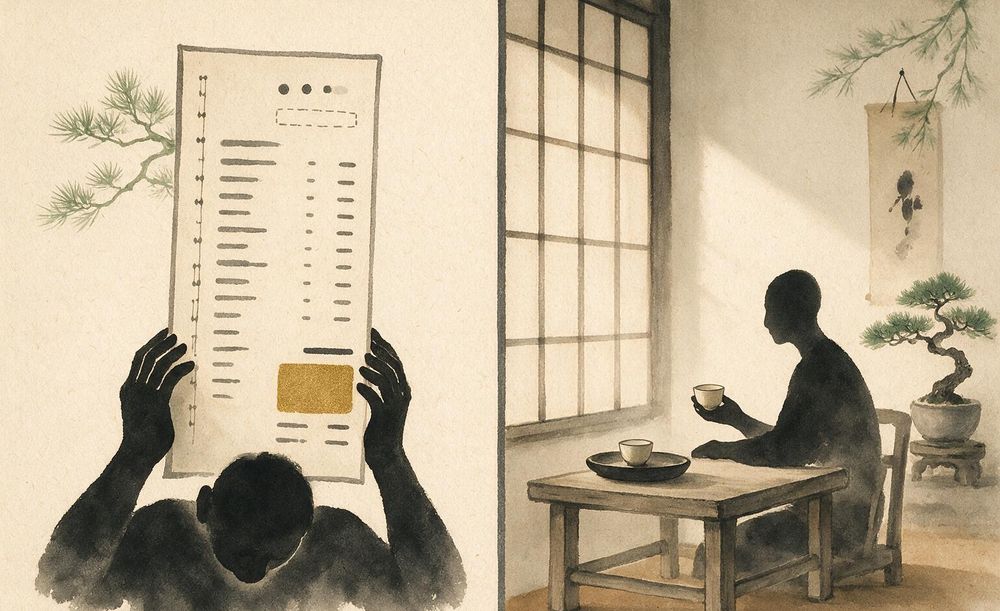 P1 · The bill
01
P1 · The bill
01
Medical debt is now the leading cause of personal bankruptcy here. A hospital stay averages over $4,000 — five times what other developed countries pay.
3 million Americans owe more than $10,000 P2 · The pill
02
P2 · The pill
02
A pill meets the moment. What the rest of the day asks for — rest, warmth, gentle movement — rarely comes up in a short visit.
The daily part is the part nobody covers P3 · The rush
03
P3 · The rush
03
A short appointment has room for one complaint. The rest of the day — sleep, food, mood, energy — usually goes unasked.
Most expensive care, lowest ranking, shortest lives P4 · The gap
04
P4 · The gap
04
The long stretch before anything turns red is where most people actually live — and where the least support exists.
This is the safest place to startWellness has a boundary. Ours is written down, and we hold to it — because the fastest way to lose your trust would be to pretend we can do more than we can.
Four steps, in this order. Nothing here is a diagnosis, and nothing here is a prescription.
What you take away is a Wellness Plan — a daily routine suggestion. It is never called a treatment plan, because it isn’t one.
Standard care is built to act once something is clearly wrong — and by that measure it does remarkable work. The long stretch before that point, where most people actually live, gets the least support. That stretch is not a disease. It is also not nothing.
A short appointment has room for one complaint. The pattern is rarely inside that complaint.